
Hardware Guides
Cabinet Knobs vs. Pulls: What Goes on Doors and Drawers?
PullSupply · 4 min read

Three forms from one collection: round knobs, short T-shaped pieces, and long bar pulls.
Start with knobs on cabinet doors and pulls on drawers if you want a simple mix. A knob keeps the hardware small on a door you swing open. A bar pull gives you more places to put your fingers on a wide drawer. Make exceptions where you reach differently: a tall pantry door can take a pull, and a small, shallow drawer can work with a knob.
Which hardware goes where?
| What you open | What to try first |
|---|---|
| Upper cabinet or light hinged door | Round knob near the opening edge |
| Narrow, shallow drawer | One knob or a short pull |
| Wide drawer or sliding pullout | Horizontal bar pull with room behind it |
| Tall hinged pantry door | Vertical pull at a comfortable reach |
Look at how each front moves. A tall panel over a slide-out trash bin may look like a door, but you open it like a drawer. A hinged door beside it can still use a knob. That simple distinction is often more useful than separating everything into upper and lower cabinets.
Use knobs where a small grip feels right
A knob leaves more of the door front visible, which can be appealing on a glass cabinet or a pair of narrow doors. A round brass knob with a chrome finish shows how little space a round profile takes up. Hold your candidate where your hand naturally lands on the opening side of the door. On a pair, check both positions together so they look level.
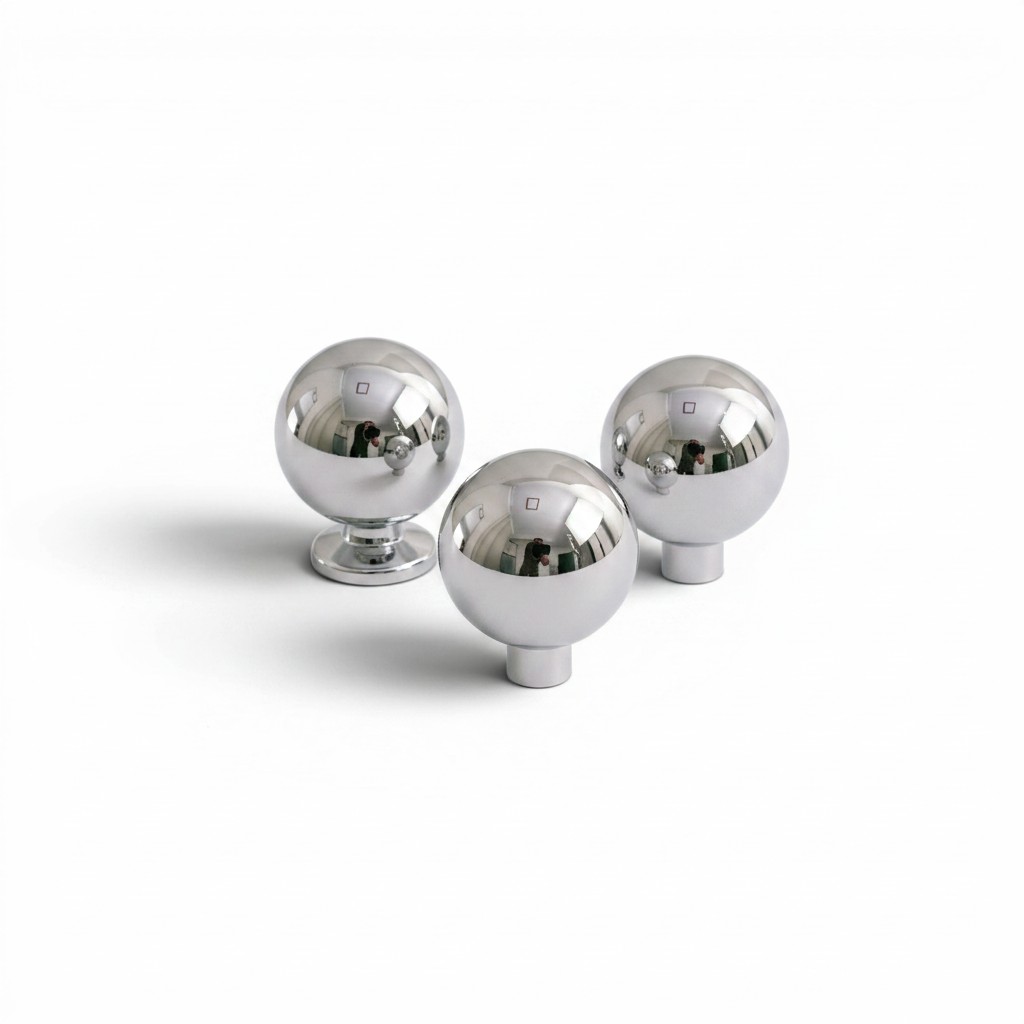
A knob can work on a shallow drawer too, especially if the front is narrow. Try the actual shape before committing to every drawer. If you prefer to hook your fingers behind a bar, compare a pull even if a knob looks right on paper.
Use pulls where you want room for your fingers
Try a pull on the drawer you open with a stack of pans inside, or on the pullout you reach for several times a day. The open space behind the bar matters as much as how long it looks from the front. A pull can also sit vertically on a hinged pantry door. The knurled brass bar pulls shown below illustrate that orientation on paired doors.

If your doors and drawers all feel better with pulls, using one design throughout is a sensible choice. Keep the shorter and longer options related so the run of cabinets looks consistent.
How to mix knobs and pulls in one kitchen
Choose one knob and one pull, then repeat them by job. For example, use round knobs on a bank of hinged doors and a matching bar on the drawers underneath. Give the tall pantry a vertical version of the drawer pull if that feels better in your hand. Repeat the decision on similar fronts rather than choosing a new shape for every cabinet.
A collection with both shapes makes the comparison easier. Our aged brushed brass knob and pull collection pairs a textured knob rim with textured pull ends. The knurled brass collection also includes a short T-shaped option that uses one mounting hole. It gives you a bar shape to compare when you want to keep an existing single hole.
Check the holes before changing styles
A standard knob uses one mounting hole; a typical bar pull uses two. If you swap a knob for a pull, confirm whether the old hole can be reused at the new position. If you go the other way, check what will cover or repair the extra hole. Use the cabinet pull measuring guide to check the exact spacing before you order a replacement.
Try one door and one drawer before fitting the whole kitchen. Then count each hardware type separately. If the shape is settled and you still need a finish, compare your choices in our white and oak cabinet hardware guide.