
Hardware Guides
How to Measure Cabinet Pulls and Choose the Right Size
PullSupply · 3 min read
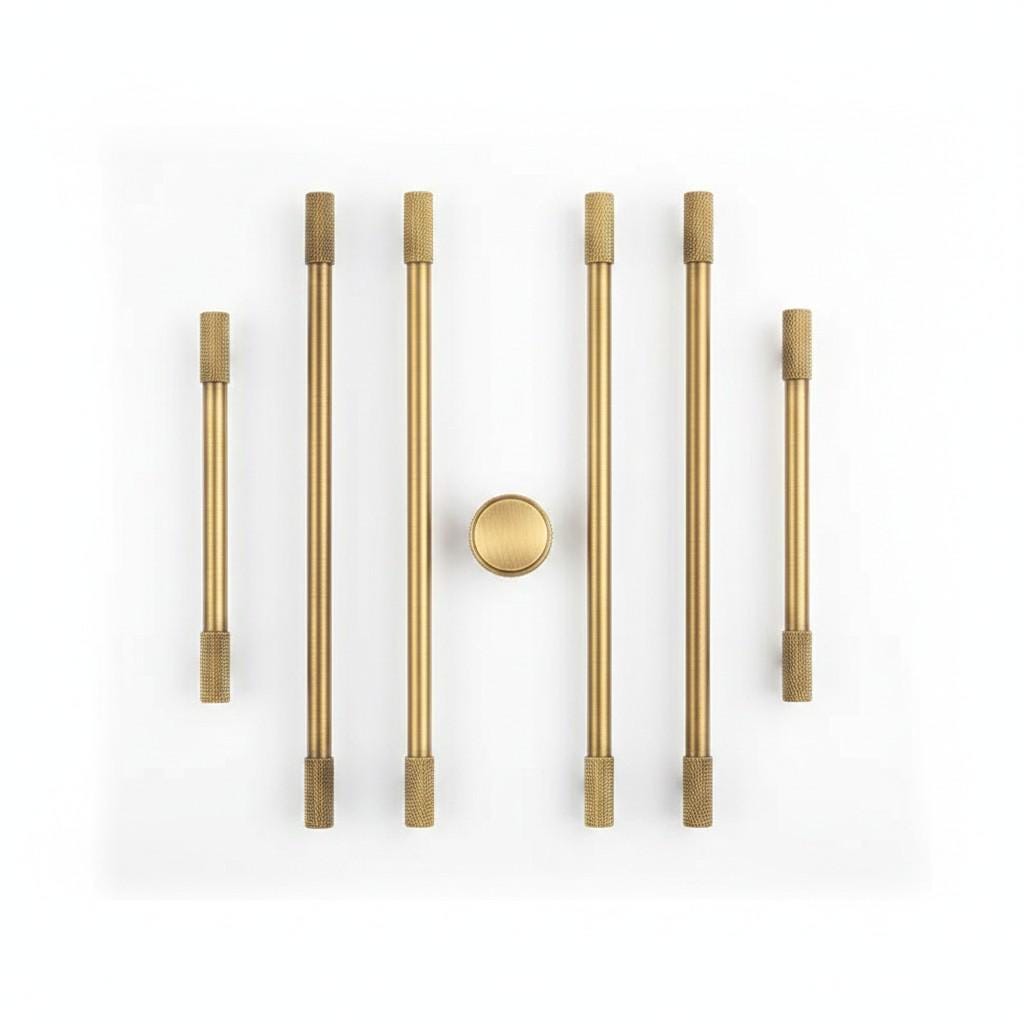
One pull profile in several lengths, with a round knob from the same collection.
If you are replacing cabinet pulls, remove one and measure straight from the center of one mounting hole to the center of the other. That distance, called center to center spacing or CTC, is the size to match if you want to reuse both holes. If the front has no holes, start by comparing the full length of the pull against the cabinet.
How to measure cabinet pulls for replacement
- Remove one pull. Support the handle while backing out the screws from inside the door or drawer. With the handle off, you can see both holes clearly.
- Measure between the centers. Line up a ruler with the middle of each hole. Record the number and its unit; use the millimeter scale if you need to distinguish two close sizes.
- Check each group of fronts. Measure a narrow drawer, a wide drawer, and a door if their handles differ. Keep a separate count for each spacing so you can order the right quantities.
Three inches is exactly 76.2 mm. It is a different hole pattern from 96 mm. A listing may round a metric size to a nearby inch fraction, so compare the stated hole spacing in the same units before ordering.
| Hole spacing | In inches |
|---|---|
| 76.2 mm | 3 in, exact |
| 96 mm | 3.78 in, approx. |
| 128 mm | 5.04 in, approx. |
| 192 mm | 7.56 in, approx. |
Hole spacing and overall length answer different questions
The 128 mm option in our aged brushed brass pull collection measures 165 mm (about 6.50 in) from end to end. Its posts are 128 mm apart. Choose the 128 mm size for the screw positions; use the 165 mm length to see how much space the bar takes up on the drawer.
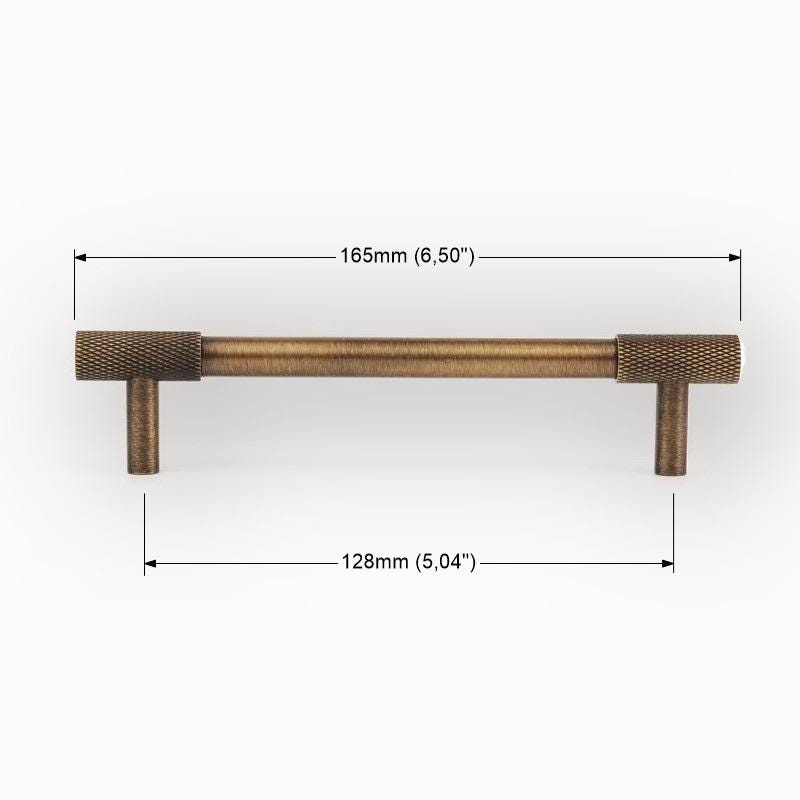
Also check projection, the distance the pull stands out from the cabinet face. Give your fingers room behind the bar and open neighboring doors and drawers to see where a new pull could get in the way. On a framed front, make sure both mounting feet will sit flat.
Choose a pull length for new cabinet fronts
Cut two paper strips to the overall lengths you are considering. Tape them in place one at a time. A shorter bar leaves more room around the edges of a narrow drawer. A longer bar can make a wide drawer or tall pantry door feel more balanced. Start around a third of the front’s width for a horizontal drawer pull if you want a visual reference, then adjust by eye.
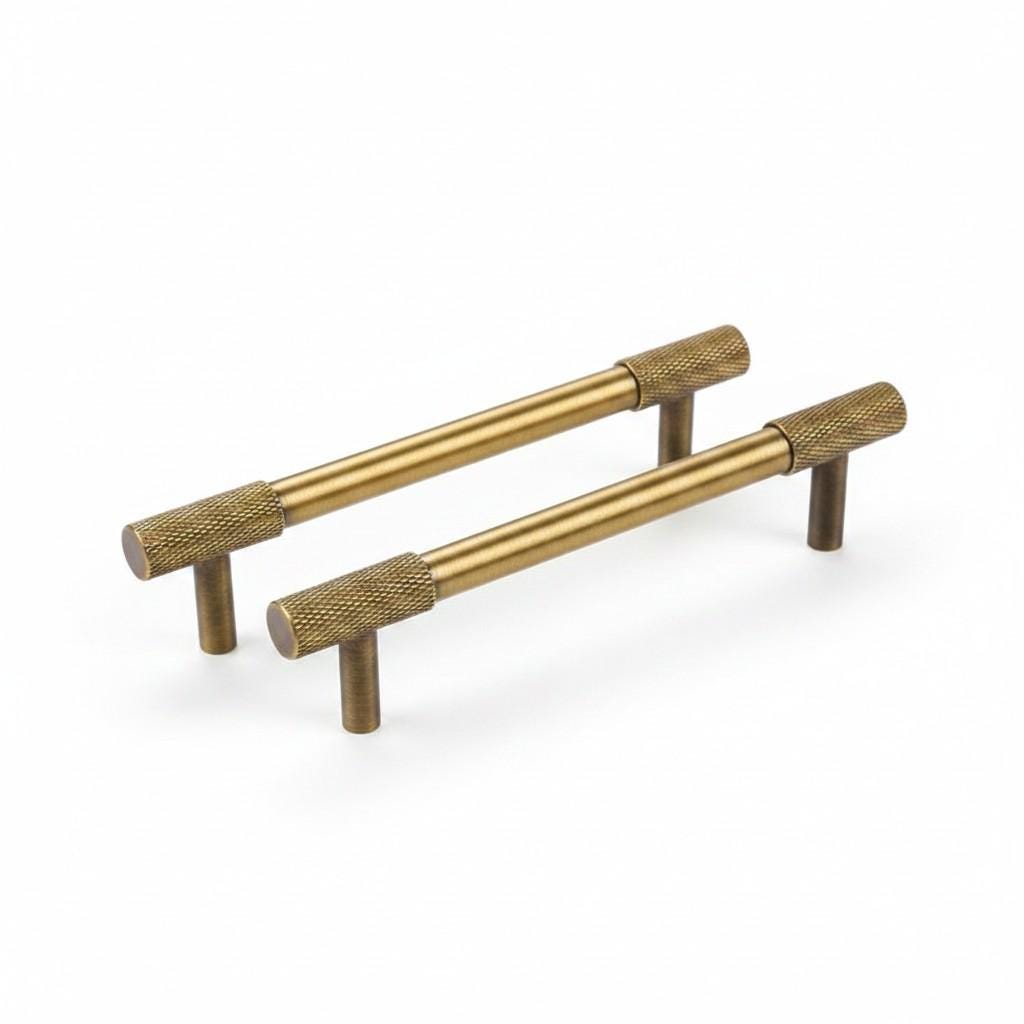
The mounting feet sit against the cabinet face. Check the selected pull's projection separately.
If you want the same finish across different fronts, compare the sizes within one collection. Our knurled solid brass pulls, for example, offer 96, 128, 192, 224, and 320 mm hole spacing. Once you have the actual pull, confirm its mounting centers and placement on one front before drilling the rest.
Check these details before buying
- For a replacement, match the existing hole spacing. If it differs, plan how you will repair or cover the old holes before choosing a new pattern.
- Confirm overall length, projection, and room to open the neighboring fronts.
- Check the screw length and thread against the selected pull and the thickness at the mounting point.
- Count each size separately and test one pull on the cabinet before installing the whole set.
Have your measurements handy? Browse PullSupply cabinet hardware and check the size options on the pull you like. If color is the next decision, see our finish guide for white and oak cabinets.