
Hardware Guides
How to Coordinate Cabinet Handles, Light Switches, and Door Stops
PullSupply · 5 min read

Brushed brass pulls and a round knob repeat the same knurled detail across different shapes.
Cabinet handles, light switches, and door stops do not have to match throughout your home. The easiest way to coordinate them is to start with what you see together from a doorway. Repeat one finish or texture in that view, let quieter pieces blend with the wall or trim, and choose a door stop that works with the door’s swing before you think about color.
Start with the view from the doorway
Stand where you enter the room and take a photo. Circle the fittings you notice first: perhaps a row of drawer pulls, a switch plate on the return wall, and a door lever. The pieces that appear together deserve the closest comparison. A stop hidden behind the open door matters more for clearance than color.
- Keep one finish you already like. Use an existing faucet, set of cabinet pulls, or row of hallway levers as the starting point. In an open plan, repeat that finish or a similar tone somewhere in the next space.
- Decide what should stand out. Brushed brass can warm up painted cabinets. Black can echo a dark window frame. A white plate can make the switch less prominent on a pale wall, leaving the cabinet hardware as the detail you notice.
- Compare the actual pieces. Two finishes called “brushed brass” can differ in tone, grain, and sheen. Hold the pull against the cabinet and the plate against the wall. Look at both in daylight and with the room lights on. If an almost-match feels distracting, repeat a texture or choose a clear contrast.
Kitchen: let the cabinet handles set the tone
Picture cream cabinets, pale stone, and oak shelves. Aged Brushed Brass pulls with knurled ends add a warm line across the drawers. If a switch sits beside the cabinets, try a brass plate from the same warm color family and compare the pieces in person. If the kitchen already has black window frames, a black plate can pick up that detail instead. Keep the stainless faucet if it works with the sink; it can have a role of its own.
Check the pantry door while you’re choosing hardware. Open it slowly and see whether the lever reaches a wall or cabinet. If a stop is needed, choose the mounting style and reach first. Use the lever or nearby trim as a finish reference.
Entry and hallway: follow what repeats along the hall
With several doors in view, the levers usually set the rhythm. In an entry with charcoal levers, warm oak, and light walls, a brass toggle switch with a black surround can echo both the warm wood and the dark door hardware. If the plate draws too much attention on that wall, compare it with white. On the entry cabinet, a small warm pull can carry the brass tone without repeating every detail.
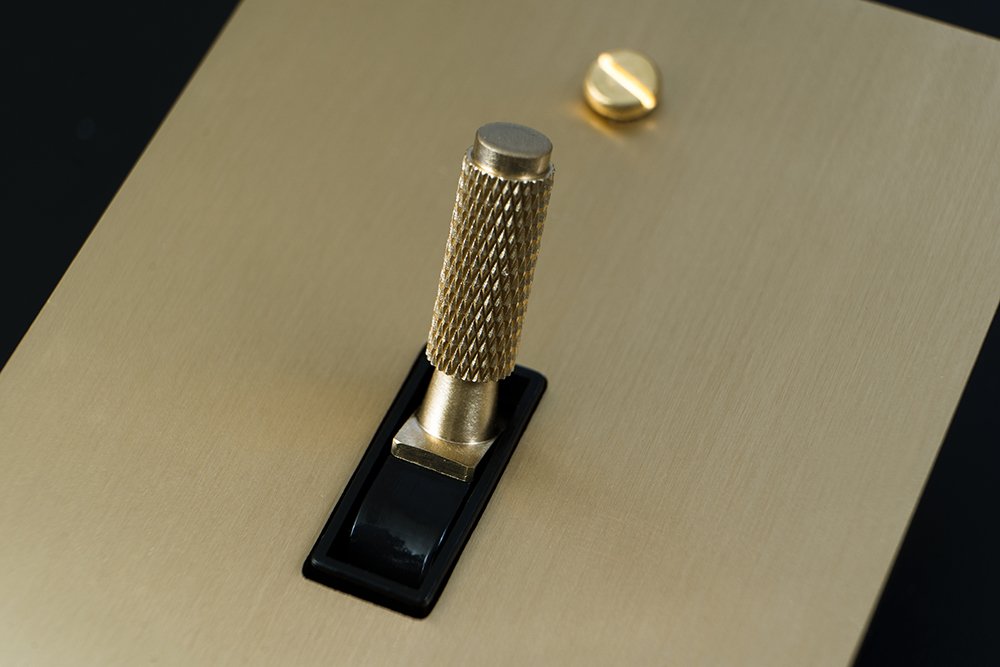
A close-up of the brass toggle and its black surround. This small dark detail can echo darker door hardware.
When the door opens toward a wall, a knurled brass wall-mounted door stop is an option if the mounting surface and reach suit the swing. When the door needs to stop away from a wall, compare floor-mounted door stops and look for a position clear of the walking path.
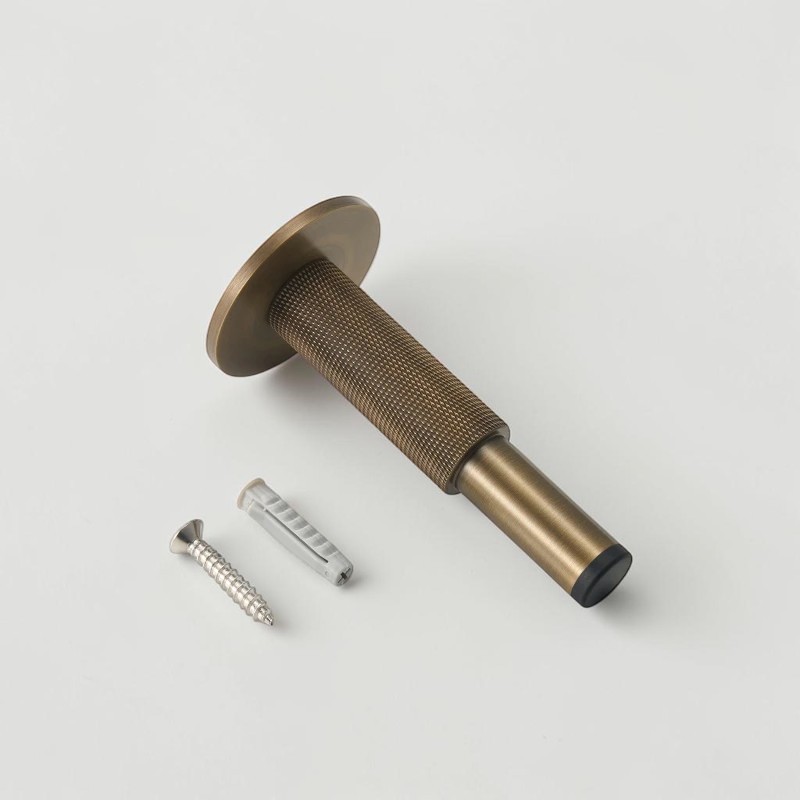
A knurled wall-mounted stop with a rubber bumper. Check its reach against the door swing before choosing the finish.
Bathroom and bedroom: give each room its own reference
In a small bathroom, start with the vanity and faucet. Oak cabinetry can carry warm pulls even when the faucet is chrome. A white plate on a light wall lets those finishes coexist without adding another prominent metal. Check that the door clears the vanity and towel hooks; its stop can follow the door lever or sit quietly behind the door.
In the bedroom, look from the bed as well as the doorway. Warm pulls can bring out the grain of a walnut dresser, while a quiet white plate keeps the wall from competing with the bedside lamps. If the bedroom door and wardrobe are in the same view, a subtle repeat such as a dark lever and a dark switch plate can connect the two.
Before ordering, check what has to fit
- Cabinet handles: Use our cabinet pull size guide to measure the existing holes. Check the pull’s overall length and how far it projects, especially beside an appliance or adjacent door. Browse cabinet handles and knobs by finish and type.
- Switches: Note each location, the number of controls, and what they operate. Have a qualified electrician confirm the device and box fit. Use the PullSupply Switch Configurator to compare available plate and control finishes, or read our guide to choosing toggle switches and rotary dimmers first.
- Door stops: Find what the door or lever would hit, then choose a mounting point that lets the stop make contact first. Check the product dimensions before choosing a finish.
Try one cabinet, one switch location, and one doorway before committing to the whole house. If those pieces sit comfortably together in the room’s actual light, you have a palette you can repeat where it makes sense.