
Hardware Guides
Knurled vs. Smooth Cabinet Hardware: How to Choose
PullSupply · 4 min read
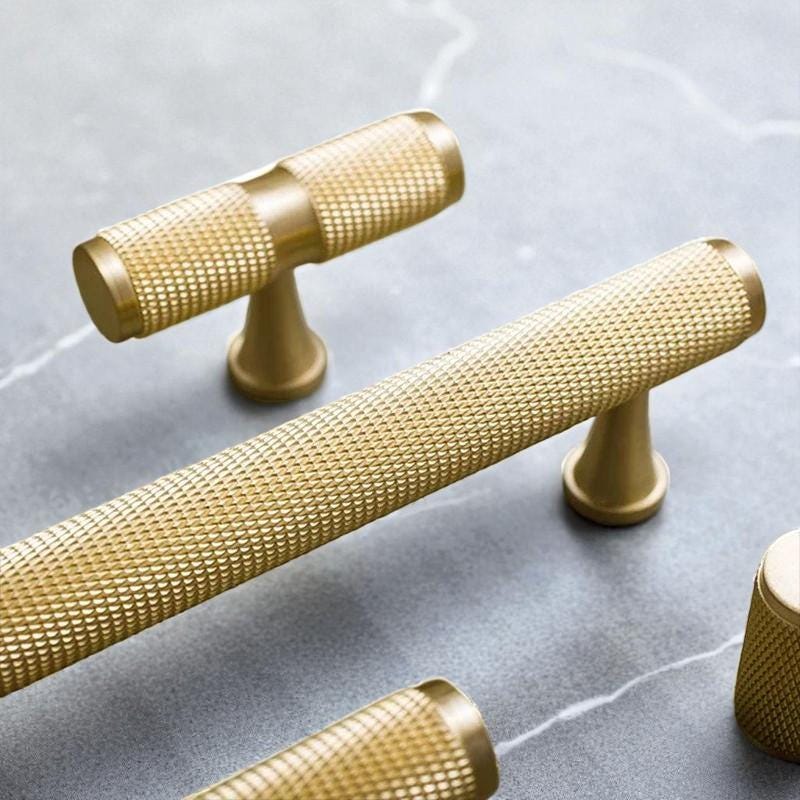
On these brass pulls, the diamond pattern runs along the bar, with smooth metal at the tips.
Choose knurled cabinet hardware when you want to see and feel a fine pattern on the knob or pull. Choose a smooth grip when you want the shape of the hardware to do the work, especially if the cabinet already has strong grain or detail. If a fully textured bar looks like too much, try a smooth center with texture at the ends.
What is knurling on cabinet hardware?
Knurling is a pattern of closely spaced ridges on a metal surface. The diamond knurl shown above uses crossing lines, which turn into small highlights and shadows as you move. These knurled brass cabinet pulls and knobs show how a long bar can carry the pattern across most of its length while a smaller knob keeps it in a tighter area.
Ribbing and fluting usually read as parallel lines rather than a diamond grid. You may see some straight-line patterns sold as straight knurling, so look at the photograph as well as the name. A smooth grip can still have a brushed finish: the fine surface grain is subtler than the relief of a crosshatch.
Compare the three looks
| Surface | Where to try it |
|---|---|
| Diamond knurl | On a plain painted front where you want the handle to add detail. |
| Ribbed or fluted detail | Where parallel lines can echo reeded glass or other straight details. |
| Smooth grip | Where wood grain, a patterned backsplash, or a shaped door already draws the eye. |
Try a smooth handle on a drawer below strongly veined stone. The smooth brass bar pulls with curved ends below still have small rings near the ends, so the shape has definition without a pattern running across the center of the bar.
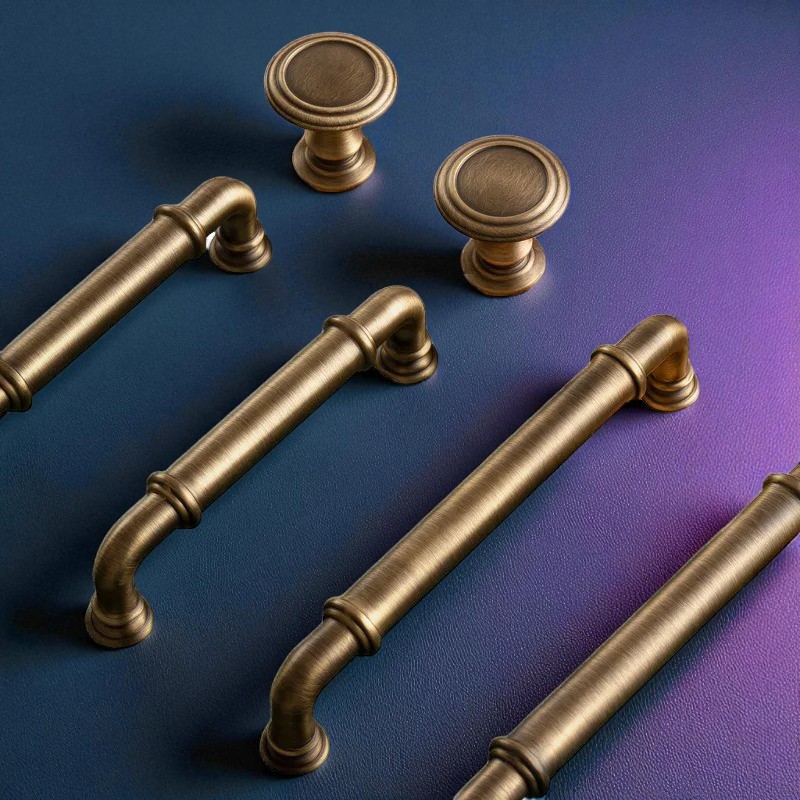
A smooth center keeps the grip visually quiet, while small rings mark the ends.
On a painted sideboard or a pair of wardrobe doors, try ribbed-end brass pulls if you want a little texture without covering the whole bar. The lines on the ends can echo nearby fluting while leaving a long, smooth surface between them.
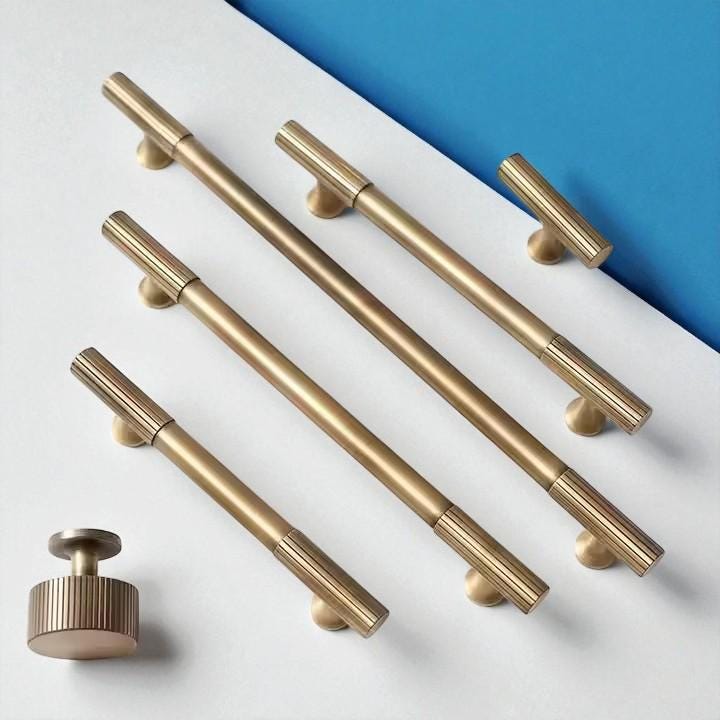
Try the texture in your room’s light
Hold a knob and a pull against the actual front. Look once from the doorway and once at arm’s length. On a cream door, a crosshatch that nearly disappears from across the room can become clear under a lamp or in side light. On a walnut cabinet, the same pattern may stand out more than you expected. Check again with the lights you use at night.
If you are mixing textures, keep the metal tone and sheen consistent where the pieces sit side by side. A smooth pull and a knurled knob can work together if they look related in the room. Compare actual pieces when possible: a finish name alone cannot tell you how two surfaces will reflect light. For help choosing the metal tone, see our hardware finish guide for white and oak cabinets.
Think about cleaning where you cook and prep
A plain bar gives a cloth an uninterrupted surface to pass over. Recesses on textured hardware may need more attention, especially on the drawer beside the range. Follow the instructions for the exact finish. PullSupply’s knurled brass care notes recommend a soft, dry microfiber cloth for routine cleaning and a clean, soft brush for dust in recessed lines. Skip abrasive pads and use polish only when the individual care instructions call for it.
Mock up one door and one drawer
- Pick a representative pair. Use a drawer you open often and a door you can see as you enter. Compare how much pattern each fitting adds.
- Try it where your hand lands. Check how the surface feels and whether your fingers fit comfortably behind the pull. If you still need to settle the shape, use our cabinet knobs vs. pulls guide.
- Check the fit before ordering. For replacements, use the cabinet pull sizing guide to check the existing hole spacing. Repeat the chosen texture on similar fronts so the room has a clear rhythm.