
Hardware Guides
Wall vs. Floor Door Stops: Which Fits Your Door?
PullSupply · 3 min read
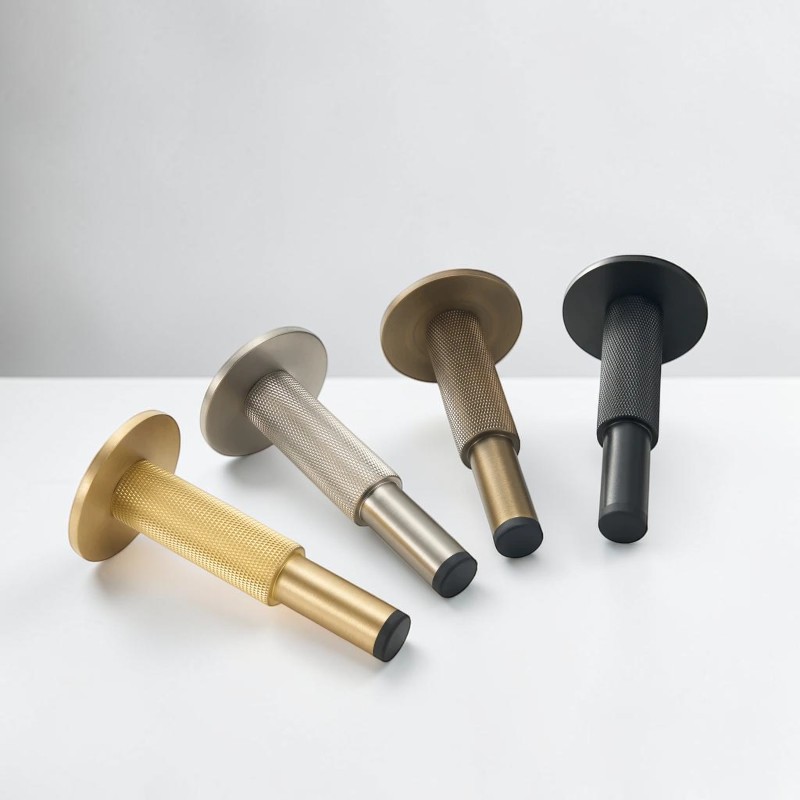
Wall stops extend from a mounting base to a bumper tip. These examples show the same design in different finishes.
Choose a wall mounted door stop when there is a suitable mounting surface within reach of the door. Consider a floor mounted door stop when a wall stop cannot reach the right spot, provided the floor can accept the fixing and the stop can sit clear of the walking route. In either case, the bumper should meet the door before its handle, edge, or other hardware reaches an obstruction.
Wall or floor? Start with the opening
| What you find | What to compare | What to check |
|---|---|---|
| The door opens toward a nearby wall | Wall mounted stop | Reach from the mounting face and space for the base. |
| The wall is too far away or blocked | Floor mounted stop | Bumper height, floor construction, and the walking route. |
| Both positions look possible | Check both at your intended stopping angle | Use the position with confirmed support and a clear contact point. |
Open the door slowly and stop before it touches anything. Watch the handle as well as the edge of the door. In one room the lever may be the first thing to reach the wall; in another, the door edge may approach a cabinet or a piece of trim. Hold the door at the opening angle you want and note where a bumper could meet the face of the door.
For a wall stop, measure from the mounting face
Projection is how far the stop extends from its mounting face to the tip of the bumper. With the door held at your planned stopping point, measure from the proposed mounting face toward the spot the bumper would touch. If the stop would mount on a suitable baseboard, use the face of that baseboard as the starting point. A measurement from the wall behind it would describe a different distance.
Check the contact with the door at that angle. A protruding handle, an angled wall, or thick trim can change where the door stops. Look at the mounting base as well as the length: it needs a suitable surface where it can sit properly. The knurled brass wall stop shows the round base and the bumper at opposite ends.
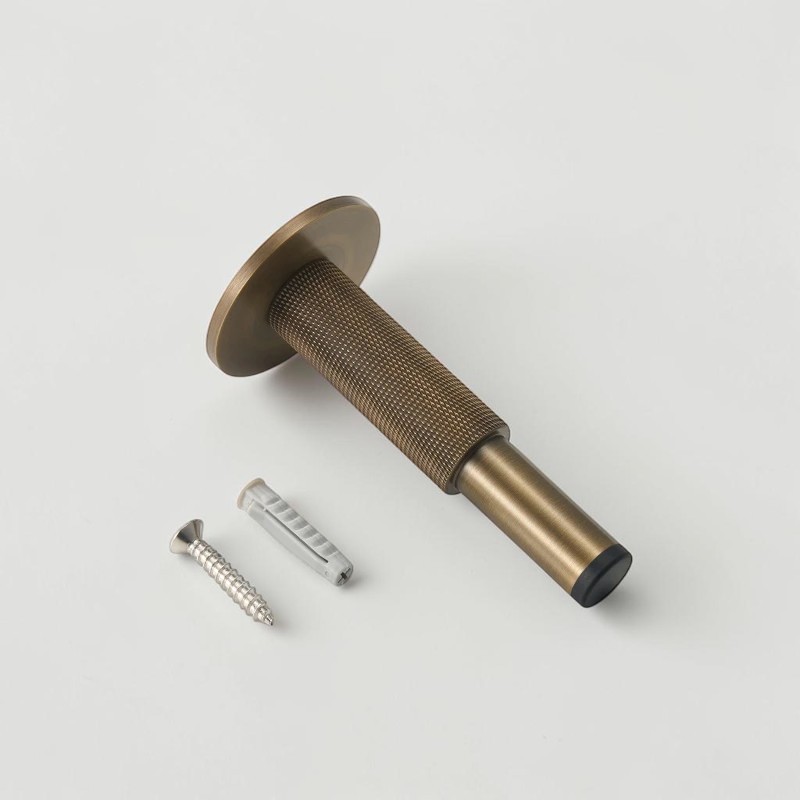
Use the mounting face and bumper tip as the two ends of the projection measurement.
For a floor stop, check the bumper against the lower door face
At the proposed position, measure from the finished floor to the lower part of the door that the bumper can meet. If the door has a sweep, the seal is not the contact point you are looking for. Compare your measurement with the height of the bumper itself. A stop’s overall height may be higher than the part intended to meet the door.
The knurled brass floor stop has a bumper ring around its body. The side view helps you see why the ring’s position matters. Check that the proposed stop avoids rugs, thresholds, and the usual walking route while still meeting the door at the intended angle.
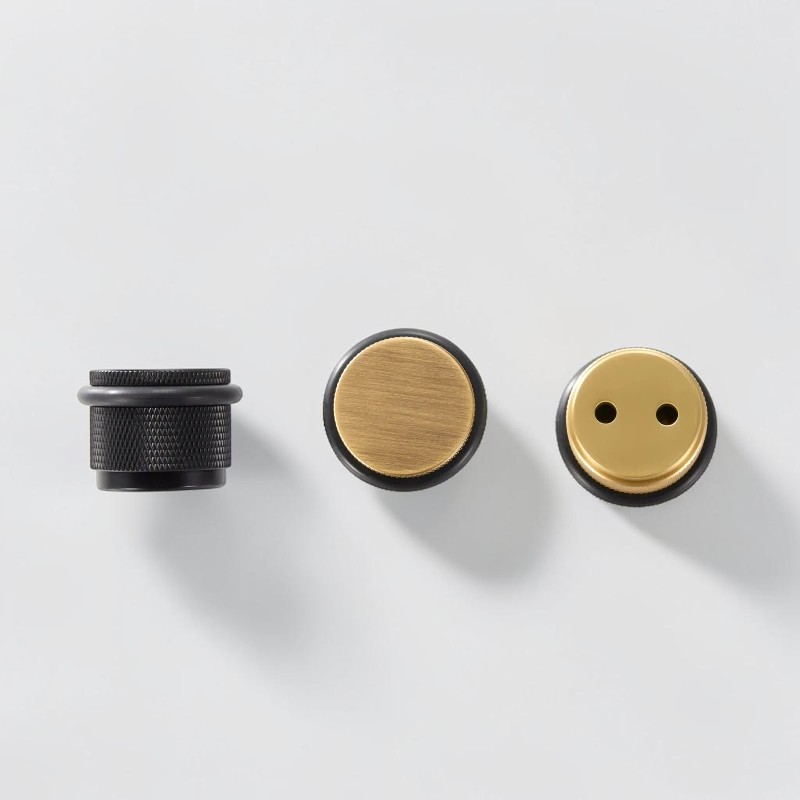
The side view shows where the bumper ring sits relative to the top of the floor stop.
What to confirm before ordering
- Stopping point: Check that the handle and door edge still clear the nearest obstruction.
- Contact and fit: Confirm the wall stop’s reach or the floor stop’s bumper height, along with the space needed for the base.
- Mounting surface: Identify the actual construction and what is behind or beneath it before any drilling. If that is uncertain, have the location checked by an installer.
Once the position and fit are settled, choose the finish you want to see in the room. Our guide to coordinating cabinet handles, light switches, and door stops shows how to carry the same finish direction through nearby details.